


AD:
Aeon Daily fictional display advertising campaign

Women’s cycling league adds scenic countryside stage

Community sport

Updated August 11, 2026, Published August 9, 2026 – By Sophie Grant
A women’s cycling peloton riding through green countryside
The new route combines demanding climbs with village festivals and a finish designed to bring spectators close to the action.

The new route combines demanding climbs with village festivals and a finish designed to bring spectators close to the action.

The national women’s cycling league will add a 128-kilometre countryside stage next season, taking the peloton through orchard roads, wooded climbs and five villages that have joined forces to host the event.

Race designers have avoided long stretches of major road, favouring a route that rewards tactical teams and strong climbers. The final circuit passes the finish twice, giving spectators several chances to see the race develop.

Local clubs will organise shorter community rides in the morning, while village squares along the route plan food markets and repair stations. Schools are preparing roadside art based on the colours of participating teams.

AD:
Aeon Daily fictional display advertising campaign

Open to more players

Organisers say equal broadcast coverage and prize money are built into the agreement. Teams have welcomed the early announcement because it gives them time to scout the climbs and plan travel.

The stage promises serious competition without losing the festival atmosphere that makes road cycling unusually close to its audience.

The reporting behind “Women’s cycling league adds scenic countryside stage” also points to a broader question for Sport: how a promising local initiative can become dependable enough to survive beyond its first season. Organisers are documenting costs, staffing needs and practical obstacles so that later decisions can be based on evidence rather than enthusiasm alone.

People involved in the work say the next stage will be deliberately measured. Instead of announcing a rapid expansion, the partners will compare participation, quality and day-to-day reliability over several months. That should make it easier to identify which parts deserve further investment and which need to be redesigned.

Building for the longer term

Access is another part of the evaluation. The project will be judged not only by headline numbers, but by whether people of different ages, incomes and levels of experience can use it without unnecessary barriers. Clear information, predictable opening times and affordable participation are all included in the review.

Independent researchers and community representatives have been invited to challenge the early findings. Their role is to test optimistic assumptions, speak with people who chose not to participate and examine any unintended effects that may be hidden by an encouraging launch period.

Funding for the immediate follow-up has been secured, although longer-term decisions remain open. A public progress report is expected after the next full operating cycle, with the underlying measurements published alongside the conclusions wherever privacy and commercial agreements allow.

For residents, the value of the experiment may ultimately be quite practical. If the approach works, it offers a model that other neighbourhoods can adapt without copying every detail. If it falls short, the transparent evaluation should still provide useful lessons about what a stronger version would require.

The editorial team will return to the story as the evidence develops. That follow-up matters because early success can look different once routines, budgets and public expectations settle into place. Readers with direct experience of the initiative are being invited to share observations that can be checked and included in later reporting.

For now, the people closest to the work describe cautious confidence rather than a finished solution. The practical details are still being refined, but the project has created enough momentum to test its central promise under ordinary conditions rather than in a short demonstration.


AD:
Aeon Daily fictional display advertising campaign
Subscribe
Notify of
guest
0 Comments
Oldest
Newest Most Voted

Youth rowing club returns to river with shared boathouse

Community sport

Updated August 11, 2026, Published August 9, 2026 – By Sophie Grant
Young rowers carrying a racing shell beside a calm river
A rebuilt riverside base brings schools and community crews together after two seasons of temporary training.

A rebuilt riverside base brings schools and community crews together after two seasons of temporary training.

Young rowers carried the first boats from the new Riverside Boathouse this weekend, marking the end of two seasons spent training from temporary trailers. The timber building is shared by three schools, a community club and an adaptive rowing programme.

Wide ramps and adjustable launching pontoons make the water easier to reach, while equipment storage has been arranged so beginners do not have to move heavy shells without supervision.

The project was funded through a mix of municipal support, small donations and volunteer work. Parents painted changing rooms, former athletes repaired oars and local builders contributed surplus materials.

AD:

Open to more players

Coaches expect the shared base to improve both safety and continuity. Young people can begin with indoor technique sessions, move to stable training boats and progress at their own pace.

The opening ended with mixed crews rather than a formal race. For the club, simply seeing boats on the river again was celebration enough.

The reporting behind “Youth rowing club returns to river with shared boathouse” also points to a broader question for Sport: how a promising local initiative can become dependable enough to survive beyond its first season. Organisers are documenting costs, staffing needs and practical obstacles so that later decisions can be based on evidence rather than enthusiasm alone.

People involved in the work say the next stage will be deliberately measured. Instead of announcing a rapid expansion, the partners will compare participation, quality and day-to-day reliability over several months. That should make it easier to identify which parts deserve further investment and which need to be redesigned.

Building for the longer term

Access is another part of the evaluation. The project will be judged not only by headline numbers, but by whether people of different ages, incomes and levels of experience can use it without unnecessary barriers. Clear information, predictable opening times and affordable participation are all included in the review.

Independent researchers and community representatives have been invited to challenge the early findings. Their role is to test optimistic assumptions, speak with people who chose not to participate and examine any unintended effects that may be hidden by an encouraging launch period.

Funding for the immediate follow-up has been secured, although longer-term decisions remain open. A public progress report is expected after the next full operating cycle, with the underlying measurements published alongside the conclusions wherever privacy and commercial agreements allow.

For residents, the value of the experiment may ultimately be quite practical. If the approach works, it offers a model that other neighbourhoods can adapt without copying every detail. If it falls short, the transparent evaluation should still provide useful lessons about what a stronger version would require.

The editorial team will return to the story as the evidence develops. That follow-up matters because early success can look different once routines, budgets and public expectations settle into place. Readers with direct experience of the initiative are being invited to share observations that can be checked and included in later reporting.

For now, the people closest to the work describe cautious confidence rather than a finished solution. The practical details are still being refined, but the project has created enough momentum to test its central promise under ordinary conditions rather than in a short demonstration.
Community football evenings expand after popular summer trial

Community sport

Updated August 11, 2026, Published August 9, 2026 – By Sophie Grant
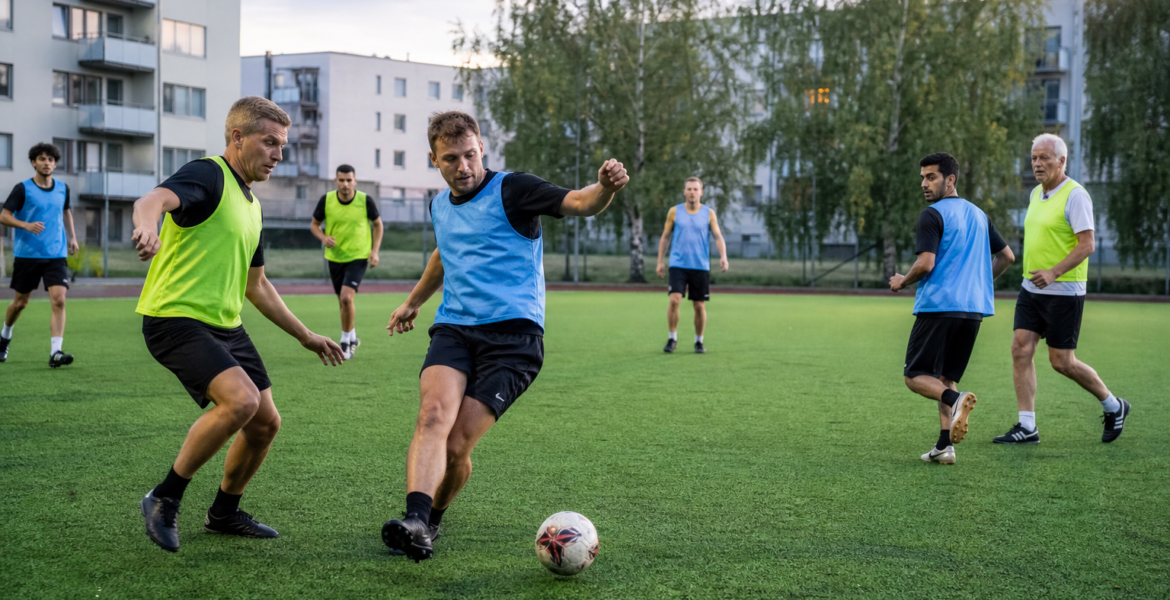
Amateur players take part in a community football evening in a Nordic town.
Open evening sessions are giving adults and teenagers a welcoming route back into team sport without the pressure of a full-season commitment.

Open evening sessions are giving adults and teenagers a welcoming route back into team sport without the pressure of a full-season commitment.

Community football clubs in three city districts are extending their evening sessions after a summer trial attracted players who had not taken part in organised sport for several years. The programme combines open training, small-sided matches and a simple booking system that allows people to join without committing to a full season.

The sessions are deliberately mixed in age and experience. Qualified coaches set the structure, but the emphasis is on movement, confidence and good games rather than selection. Equipment can be borrowed at the ground, removing one of the small costs that often keeps new participants away.

Local schools make their artificial pitches available after lessons, while established clubs provide changing rooms and volunteer coordinators. That shared arrangement means the programme can use existing facilities at hours when many of them would otherwise stand empty.

AD:

Open to more players

Organisers say the strongest response has come from adults returning to sport after work and teenagers looking for a less competitive route into a team. Separate beginner groups are available during the first half-hour before everyone comes together for short matches.

The health department is evaluating attendance, injuries and participants’ own assessment of wellbeing. Coaches have also been asked to record why people stop coming, since retention is a more meaningful measure than a crowded opening night.

Evening transport remains a practical concern. Two grounds are close to tram stops, but the third depends on an infrequent bus. The district is discussing a later service on training nights and secure bicycle parking beside the entrance.

Funding has been confirmed through the winter, when indoor school halls will replace outdoor pitches during the coldest weeks. Clubs will then decide whether the open sessions should become a permanent part of their community programmes.

Building for the longer term

Players who attended the trial describe its atmosphere as serious enough to be satisfying but relaxed enough to welcome mistakes. That balance, coaches say, is the central idea: people are more likely to make sport part of ordinary life when every session does not feel like an audition.

The expanded programme begins next month. Registration remains free, and a limited number of places will be kept open each week for people who decide to join at short notice.

The reporting behind “Community football evenings expand after popular summer trial” also points to a broader question for Sport: how a promising local initiative can become dependable enough to survive beyond its first season. Organisers are documenting costs, staffing needs and practical obstacles so that later decisions can be based on evidence rather than enthusiasm alone.

People involved in the work say the next stage will be deliberately measured. Instead of announcing a rapid expansion, the partners will compare participation, quality and day-to-day reliability over several months. That should make it easier to identify which parts deserve further investment and which need to be redesigned.

Access is another part of the evaluation. The project will be judged not only by headline numbers, but by whether people of different ages, incomes and levels of experience can use it without unnecessary barriers. Clear information, predictable opening times and affordable participation are all included in the review.