
Open evening sessions are giving adults and teenagers a welcoming route back into team sport without the pressure of a full-season commitment.
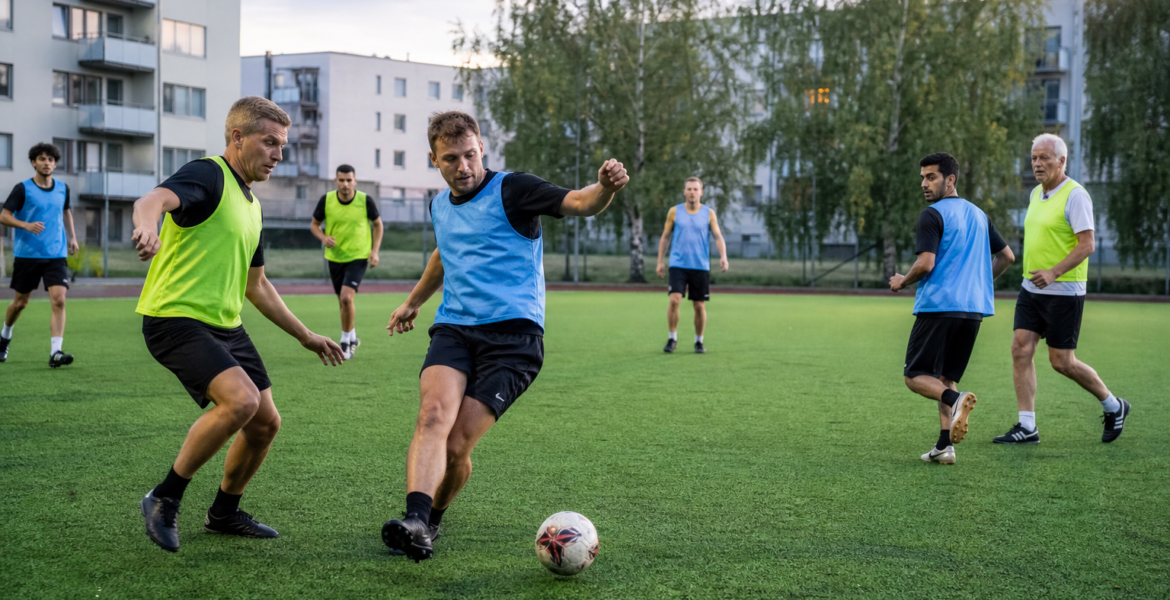
Community football clubs in three city districts are extending their evening sessions after a summer trial attracted players who had not taken part in organised sport for several years. The programme combines open training, small-sided matches and a simple booking system that allows people to join without committing to a full season.
The sessions are deliberately mixed in age and experience. Qualified coaches set the structure, but the emphasis is on movement, confidence and good games rather than selection. Equipment can be borrowed at the ground, removing one of the small costs that often keeps new participants away.
Local schools make their artificial pitches available after lessons, while established clubs provide changing rooms and volunteer coordinators. That shared arrangement means the programme can use existing facilities at hours when many of them would otherwise stand empty.

Open to more players
Organisers say the strongest response has come from adults returning to sport after work and teenagers looking for a less competitive route into a team. Separate beginner groups are available during the first half-hour before everyone comes together for short matches.
The health department is evaluating attendance, injuries and participants’ own assessment of wellbeing. Coaches have also been asked to record why people stop coming, since retention is a more meaningful measure than a crowded opening night.
Evening transport remains a practical concern. Two grounds are close to tram stops, but the third depends on an infrequent bus. The district is discussing a later service on training nights and secure bicycle parking beside the entrance.
Funding has been confirmed through the winter, when indoor school halls will replace outdoor pitches during the coldest weeks. Clubs will then decide whether the open sessions should become a permanent part of their community programmes.
Building for the longer term
Players who attended the trial describe its atmosphere as serious enough to be satisfying but relaxed enough to welcome mistakes. That balance, coaches say, is the central idea: people are more likely to make sport part of ordinary life when every session does not feel like an audition.
The expanded programme begins next month. Registration remains free, and a limited number of places will be kept open each week for people who decide to join at short notice.
The reporting behind “Community football evenings expand after popular summer trial” also points to a broader question for Sport: how a promising local initiative can become dependable enough to survive beyond its first season. Organisers are documenting costs, staffing needs and practical obstacles so that later decisions can be based on evidence rather than enthusiasm alone.
People involved in the work say the next stage will be deliberately measured. Instead of announcing a rapid expansion, the partners will compare participation, quality and day-to-day reliability over several months. That should make it easier to identify which parts deserve further investment and which need to be redesigned.
Access is another part of the evaluation. The project will be judged not only by headline numbers, but by whether people of different ages, incomes and levels of experience can use it without unnecessary barriers. Clear information, predictable opening times and affordable participation are all included in the review.