
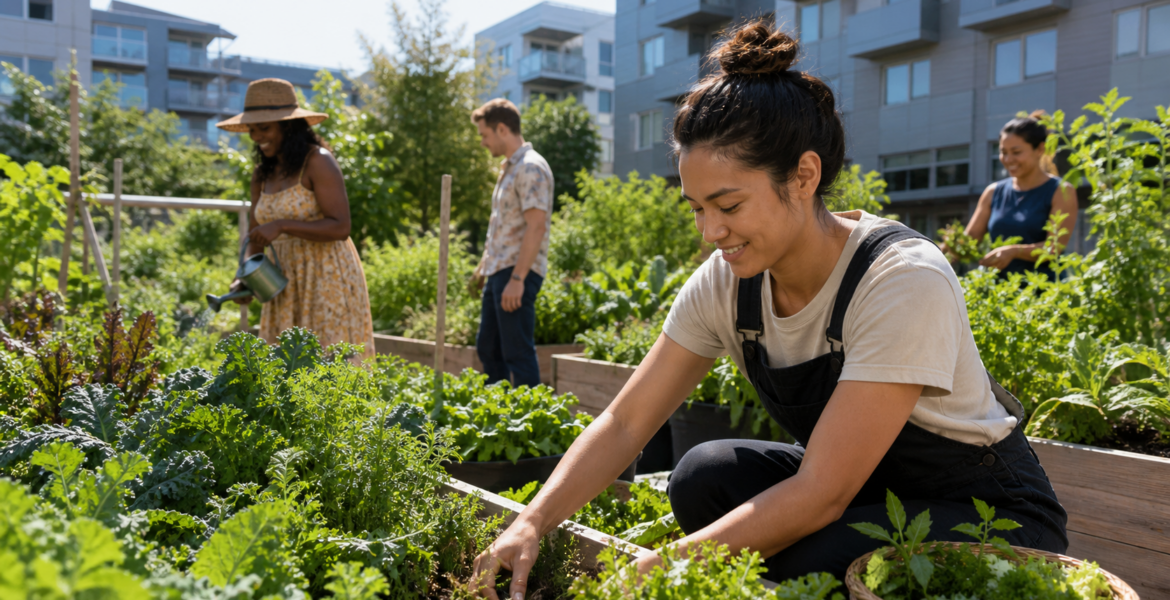
Small shared gardens are turning overlooked corners into lively habitats for bees, butterflies and neighbours.
A network of compact community gardens is changing the character of several dense city blocks, according to a new survey of insects carried out by university students and local residents. Even the smallest plots attracted a surprisingly wide range of bees and butterflies once flowering herbs replaced bare gravel.
The gardens are designed to be useful as well as beautiful. Residents grow beans, salads and berries beside native flowers, while rain barrels reduce demand on the mains supply during dry weeks. Shared benches have made the plots informal meeting places after work.
The survey found that continuity mattered more than size. A chain of balconies, tree pits and pocket gardens allowed insects to move between larger parks. Organisers are therefore offering simple planting kits to shops and apartment associations along the connecting streets.

A practical local response
Children from a nearby school help record seasonal changes and have built shallow water dishes for insects. Their observations will contribute to a longer study of how urban habitats respond to hotter summers.
The project’s next step is practical rather than grand: more soil, more shade and a few extra pairs of hands. Residents say that is precisely why it feels durable.
The reporting behind “Community gardens bring pollinators back to city blocks” also points to a broader question for Environment: how a promising local initiative can become dependable enough to survive beyond its first season. Organisers are documenting costs, staffing needs and practical obstacles so that later decisions can be based on evidence rather than enthusiasm alone.
People involved in the work say the next stage will be deliberately measured. Instead of announcing a rapid expansion, the partners will compare participation, quality and day-to-day reliability over several months. That should make it easier to identify which parts deserve further investment and which need to be redesigned.
What happens next
Access is another part of the evaluation. The project will be judged not only by headline numbers, but by whether people of different ages, incomes and levels of experience can use it without unnecessary barriers. Clear information, predictable opening times and affordable participation are all included in the review.
Independent researchers and community representatives have been invited to challenge the early findings. Their role is to test optimistic assumptions, speak with people who chose not to participate and examine any unintended effects that may be hidden by an encouraging launch period.
Funding for the immediate follow-up has been secured, although longer-term decisions remain open. A public progress report is expected after the next full operating cycle, with the underlying measurements published alongside the conclusions wherever privacy and commercial agreements allow.
For residents, the value of the experiment may ultimately be quite practical. If the approach works, it offers a model that other neighbourhoods can adapt without copying every detail. If it falls short, the transparent evaluation should still provide useful lessons about what a stronger version would require.
The editorial team will return to the story as the evidence develops. That follow-up matters because early success can look different once routines, budgets and public expectations settle into place. Readers with direct experience of the initiative are being invited to share observations that can be checked and included in later reporting.