

AD:

Local newsroom launches weekly climate desk for practical questions

Updated August 11, 2026, Published August 1, 2026 – By Maya Collins
Local newsroom launches weekly climate desk for practical questions
A fictional local newsroom is launching a practical climate desk built around reader questions.

A fictional local newsroom is launching a practical climate desk built around reader questions.

A fictional newsroom project will answer reader questions about insurance, heating, commuting and home repairs in a changing climate.

Editors say the desk will avoid abstract targets and focus on decisions households are already making.

The first editions will cover basement flooding, summer cooling and electric bike grants.

AD:
Aeon Daily fictional display advertising campaign

A shared local effort

Community groups will be invited to submit recurring questions for follow-up explainers.

Each weekly edition will answer one practical question submitted by readers, supported by local data and interviews with specialists. The newsroom says it will publish uncertainty and competing evidence rather than force every issue into a simple verdict.

The desk will also maintain a public source list and invite corrections from researchers, public agencies and residents affected by the policies being examined.

Reporters will spend one day each month meeting residents outside the newsroom, beginning with neighbourhoods that have experienced flooding and unusually high summer temperatures. Questions gathered there will shape both explanatory pieces and requests for public records.

What happens next

The editor says the desk will avoid presenting individual lifestyle choices as a substitute for scrutiny of infrastructure, budgets and regulation. Practical service journalism and accountability reporting will be published together.

The reporting behind “Local newsroom launches weekly climate desk for practical questions” also points to a broader question for Society: how a promising local initiative can become dependable enough to survive beyond its first season. Organisers are documenting costs, staffing needs and practical obstacles so that later decisions can be based on evidence rather than enthusiasm alone.

People involved in the work say the next stage will be deliberately measured. Instead of announcing a rapid expansion, the partners will compare participation, quality and day-to-day reliability over several months. That should make it easier to identify which parts deserve further investment and which need to be redesigned.

Access is another part of the evaluation. The project will be judged not only by headline numbers, but by whether people of different ages, incomes and levels of experience can use it without unnecessary barriers. Clear information, predictable opening times and affordable participation are all included in the review.

Independent researchers and community representatives have been invited to challenge the early findings. Their role is to test optimistic assumptions, speak with people who chose not to participate and examine any unintended effects that may be hidden by an encouraging launch period.

Funding for the immediate follow-up has been secured, although longer-term decisions remain open. A public progress report is expected after the next full operating cycle, with the underlying measurements published alongside the conclusions wherever privacy and commercial agreements allow.

For residents, the value of the experiment may ultimately be quite practical. If the approach works, it offers a model that other neighbourhoods can adapt without copying every detail. If it falls short, the transparent evaluation should still provide useful lessons about what a stronger version would require.

The editorial team will return to the story as the evidence develops. That follow-up matters because early success can look different once routines, budgets and public expectations settle into place. Readers with direct experience of the initiative are being invited to share observations that can be checked and included in later reporting.


AD:
Aeon Daily fictional display advertising campaign
Subscribe
Notify of
guest
0 Comments
Oldest
Newest Most Voted

Independent publishers form shared translation desk

Culture in shared spaces

Updated August 11, 2026, Published August 8, 2026 – By Maya Collins
Editors and translators work around a table in a European newsroom.
Six independent newsrooms are pooling editors and translators to make investigations available across language borders without surrendering editorial control.

Six independent newsrooms are pooling editors and translators to make investigations available across language borders without surrendering editorial control.

Six independent publishers have established a shared translation desk to help smaller newsrooms distribute investigations across language borders. Each participating publication retains responsibility for reporting, fact-checking and final publication.

The desk begins with human translation supported by terminology databases and transcription tools. Editors say automated systems may speed up routine work, but every article will be reviewed by a journalist who understands the target language and local context.

The collaboration is designed for stories with regional relevance, including public procurement, environmental permits and cross-border labour conditions. Publishers will be able to request a translation or offer a completed investigation to the group.

AD:

A shared local effort

Funding comes from membership fees rather than a central sponsor. The partners say this structure reduces the risk that one large newsroom determines which stories deserve attention.

The first shared package will examine how small municipalities purchase digital services. A public corrections log will follow each translated version so changes remain visible across all participating sites.

Editors have agreed on a shared disclosure for translated work, naming the originating newsroom and explaining significant local edits. Publications may add context or reporting, but they may not remove corrections or obscure where the investigation began.

The partners expect the desk to handle a limited number of substantial articles rather than a high-volume feed. Their stated goal is durable cooperation and careful editing, not producing the largest possible count of translated pages.

What happens next

The reporting behind “Independent publishers form shared translation desk” also points to a broader question for Society: how a promising local initiative can become dependable enough to survive beyond its first season. Organisers are documenting costs, staffing needs and practical obstacles so that later decisions can be based on evidence rather than enthusiasm alone.

People involved in the work say the next stage will be deliberately measured. Instead of announcing a rapid expansion, the partners will compare participation, quality and day-to-day reliability over several months. That should make it easier to identify which parts deserve further investment and which need to be redesigned.

Access is another part of the evaluation. The project will be judged not only by headline numbers, but by whether people of different ages, incomes and levels of experience can use it without unnecessary barriers. Clear information, predictable opening times and affordable participation are all included in the review.

Independent researchers and community representatives have been invited to challenge the early findings. Their role is to test optimistic assumptions, speak with people who chose not to participate and examine any unintended effects that may be hidden by an encouraging launch period.

Funding for the immediate follow-up has been secured, although longer-term decisions remain open. A public progress report is expected after the next full operating cycle, with the underlying measurements published alongside the conclusions wherever privacy and commercial agreements allow.

For residents, the value of the experiment may ultimately be quite practical. If the approach works, it offers a model that other neighbourhoods can adapt without copying every detail. If it falls short, the transparent evaluation should still provide useful lessons about what a stronger version would require.

City libraries become cooling hubs as summer plan expands

Updated August 11, 2026, Published July 30, 2026 – By Maya Collins
City libraries become cooling hubs as summer plan expands
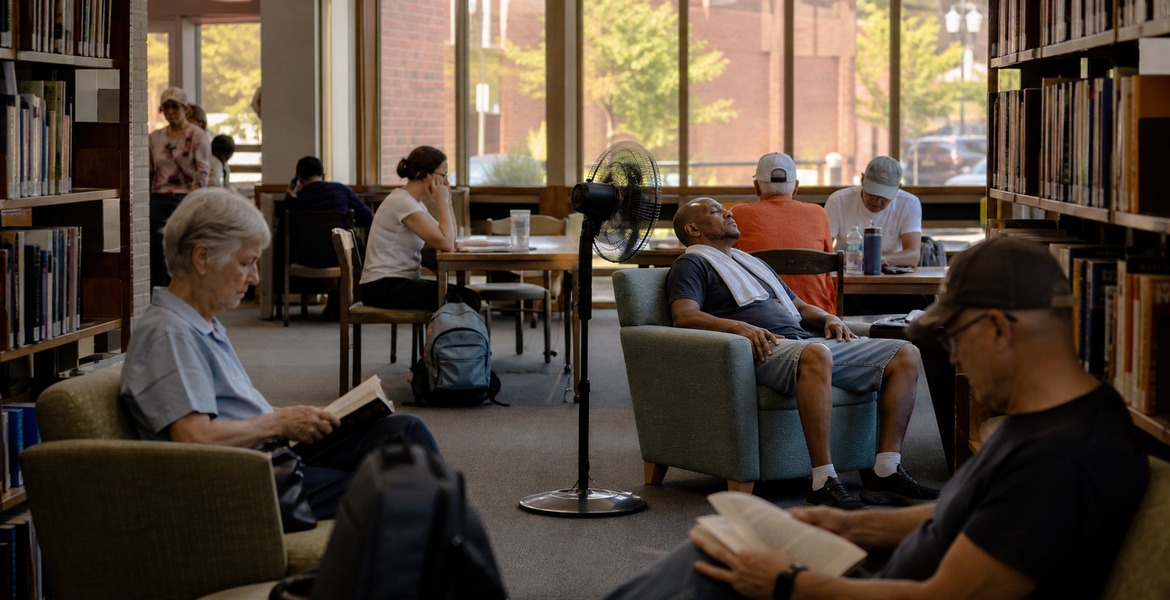
A fictional city is expanding its summer heat plan by turning libraries into cooling hubs.

A fictional city is expanding its summer heat plan by turning libraries into cooling hubs.

A fictional city is adding libraries to its summer heat plan, turning reading rooms into daytime cooling hubs.

The programme includes longer opening hours, water stations and quiet rooms for older residents.

Librarians say the plan should include extra staffing because heat events often bring more vulnerable visitors.

AD:

A shared local effort

The city will publish a live map showing open cooling spaces during heat alerts.

Extended opening hours are triggered by indoor temperature forecasts, and staff receive additional training in heat-related first aid. Visitors can use seating, water and internet access without registering for a programme.

City officials are mapping which neighbourhoods remain more than a short walk from a cooling space before next summer.

Libraries were selected because they are familiar, step-free public places in many districts. The programme funds security and additional staff so ordinary library work can continue while more visitors use the buildings during heat alerts.

What happens next

Public-health teams will monitor attendance without collecting personal histories. Their evaluation will focus on opening hours, geographic coverage and whether residents can reach a cool space by walking or public transport.

The reporting behind “City libraries become cooling hubs as summer plan expands” also points to a broader question for Society: how a promising local initiative can become dependable enough to survive beyond its first season. Organisers are documenting costs, staffing needs and practical obstacles so that later decisions can be based on evidence rather than enthusiasm alone.

People involved in the work say the next stage will be deliberately measured. Instead of announcing a rapid expansion, the partners will compare participation, quality and day-to-day reliability over several months. That should make it easier to identify which parts deserve further investment and which need to be redesigned.

Access is another part of the evaluation. The project will be judged not only by headline numbers, but by whether people of different ages, incomes and levels of experience can use it without unnecessary barriers. Clear information, predictable opening times and affordable participation are all included in the review.

Independent researchers and community representatives have been invited to challenge the early findings. Their role is to test optimistic assumptions, speak with people who chose not to participate and examine any unintended effects that may be hidden by an encouraging launch period.

Funding for the immediate follow-up has been secured, although longer-term decisions remain open. A public progress report is expected after the next full operating cycle, with the underlying measurements published alongside the conclusions wherever privacy and commercial agreements allow.

For residents, the value of the experiment may ultimately be quite practical. If the approach works, it offers a model that other neighbourhoods can adapt without copying every detail. If it falls short, the transparent evaluation should still provide useful lessons about what a stronger version would require.

The editorial team will return to the story as the evidence develops. That follow-up matters because early success can look different once routines, budgets and public expectations settle into place. Readers with direct experience of the initiative are being invited to share observations that can be checked and included in later reporting.