

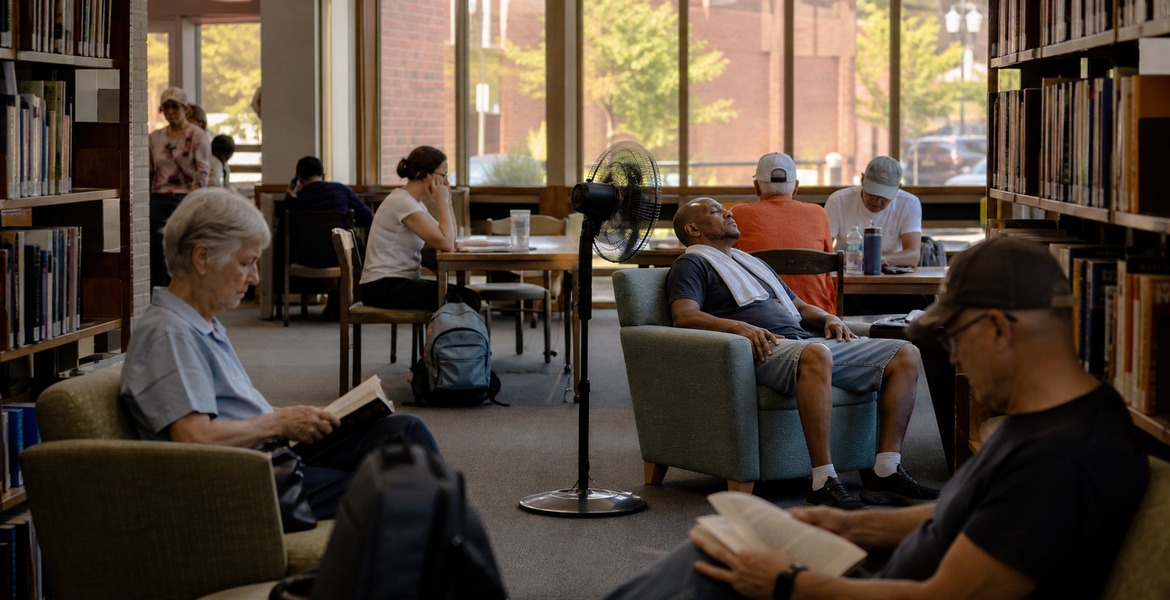
A fictional city is expanding its summer heat plan by turning libraries into cooling hubs.
A fictional city is adding libraries to its summer heat plan, turning reading rooms into daytime cooling hubs.
The programme includes longer opening hours, water stations and quiet rooms for older residents.
Librarians say the plan should include extra staffing because heat events often bring more vulnerable visitors.

A shared local effort
The city will publish a live map showing open cooling spaces during heat alerts.
Extended opening hours are triggered by indoor temperature forecasts, and staff receive additional training in heat-related first aid. Visitors can use seating, water and internet access without registering for a programme.
City officials are mapping which neighbourhoods remain more than a short walk from a cooling space before next summer.
Libraries were selected because they are familiar, step-free public places in many districts. The programme funds security and additional staff so ordinary library work can continue while more visitors use the buildings during heat alerts.
What happens next
Public-health teams will monitor attendance without collecting personal histories. Their evaluation will focus on opening hours, geographic coverage and whether residents can reach a cool space by walking or public transport.
The reporting behind “City libraries become cooling hubs as summer plan expands” also points to a broader question for Society: how a promising local initiative can become dependable enough to survive beyond its first season. Organisers are documenting costs, staffing needs and practical obstacles so that later decisions can be based on evidence rather than enthusiasm alone.
People involved in the work say the next stage will be deliberately measured. Instead of announcing a rapid expansion, the partners will compare participation, quality and day-to-day reliability over several months. That should make it easier to identify which parts deserve further investment and which need to be redesigned.
Access is another part of the evaluation. The project will be judged not only by headline numbers, but by whether people of different ages, incomes and levels of experience can use it without unnecessary barriers. Clear information, predictable opening times and affordable participation are all included in the review.
Independent researchers and community representatives have been invited to challenge the early findings. Their role is to test optimistic assumptions, speak with people who chose not to participate and examine any unintended effects that may be hidden by an encouraging launch period.
Funding for the immediate follow-up has been secured, although longer-term decisions remain open. A public progress report is expected after the next full operating cycle, with the underlying measurements published alongside the conclusions wherever privacy and commercial agreements allow.
For residents, the value of the experiment may ultimately be quite practical. If the approach works, it offers a model that other neighbourhoods can adapt without copying every detail. If it falls short, the transparent evaluation should still provide useful lessons about what a stronger version would require.
The editorial team will return to the story as the evidence develops. That follow-up matters because early success can look different once routines, budgets and public expectations settle into place. Readers with direct experience of the initiative are being invited to share observations that can be checked and included in later reporting.