
A fictional satellite service aims to help farmers respond earlier to dry spring conditions.
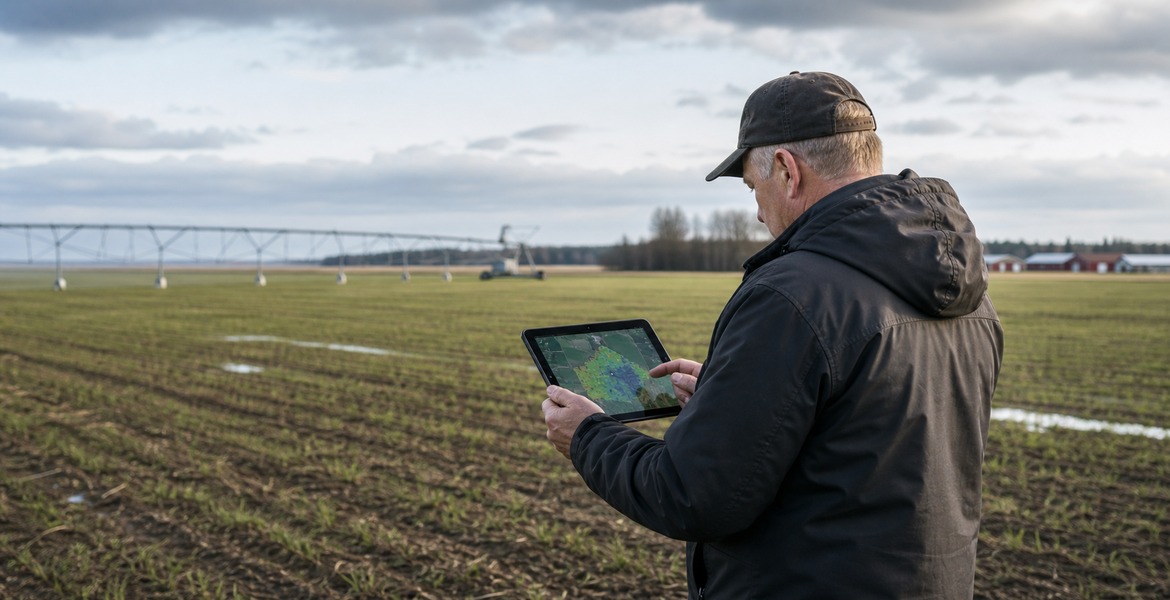
A fictional satellite service is giving farmers earlier warnings when spring soil moisture falls below local thresholds.
The system combines satellite observations with farm-reported soil samples and local rainfall records.
Agronomists say the service could help growers decide when to delay sowing or adjust irrigation plans.

How the work is being tested
The first alerts will be tested in grain-producing regions before expanding to vegetable farms.
The service combines satellite observations with local soil sensors and short-range weather forecasts. Farmers receive a confidence range rather than a single moisture number so they can judge whether irrigation or field work should be delayed.
Agricultural advisers will compare the warnings with crop outcomes across the season before recommending wider use.
The warning service is being tested on farms with different soils and crop rotations so that its limits are visible. A model that performs well on sandy land may give misleading guidance in heavier ground only a few kilometres away.
The next stage of evidence
Researchers will publish failed predictions as well as successful ones. That record should help advisers decide when satellite data is useful and when a field inspection remains the better source of evidence.
The reporting behind “New satellite service gives farmers earlier soil moisture warnings” also points to a broader question for Science & Research: how a promising local initiative can become dependable enough to survive beyond its first season. Organisers are documenting costs, staffing needs and practical obstacles so that later decisions can be based on evidence rather than enthusiasm alone.
People involved in the work say the next stage will be deliberately measured. Instead of announcing a rapid expansion, the partners will compare participation, quality and day-to-day reliability over several months. That should make it easier to identify which parts deserve further investment and which need to be redesigned.
Access is another part of the evaluation. The project will be judged not only by headline numbers, but by whether people of different ages, incomes and levels of experience can use it without unnecessary barriers. Clear information, predictable opening times and affordable participation are all included in the review.
Independent researchers and community representatives have been invited to challenge the early findings. Their role is to test optimistic assumptions, speak with people who chose not to participate and examine any unintended effects that may be hidden by an encouraging launch period.
Funding for the immediate follow-up has been secured, although longer-term decisions remain open. A public progress report is expected after the next full operating cycle, with the underlying measurements published alongside the conclusions wherever privacy and commercial agreements allow.
For residents, the value of the experiment may ultimately be quite practical. If the approach works, it offers a model that other neighbourhoods can adapt without copying every detail. If it falls short, the transparent evaluation should still provide useful lessons about what a stronger version would require.
The editorial team will return to the story as the evidence develops. That follow-up matters because early success can look different once routines, budgets and public expectations settle into place. Readers with direct experience of the initiative are being invited to share observations that can be checked and included in later reporting.