

AD:
Aeon Daily fictional display advertising campaign

Apartment retrofit fund targets draughty postwar suburbs

Circular materials

Updated August 11, 2026, Published July 29, 2026 – By Marcus Reed
Apartment retrofit fund targets draughty postwar suburbs
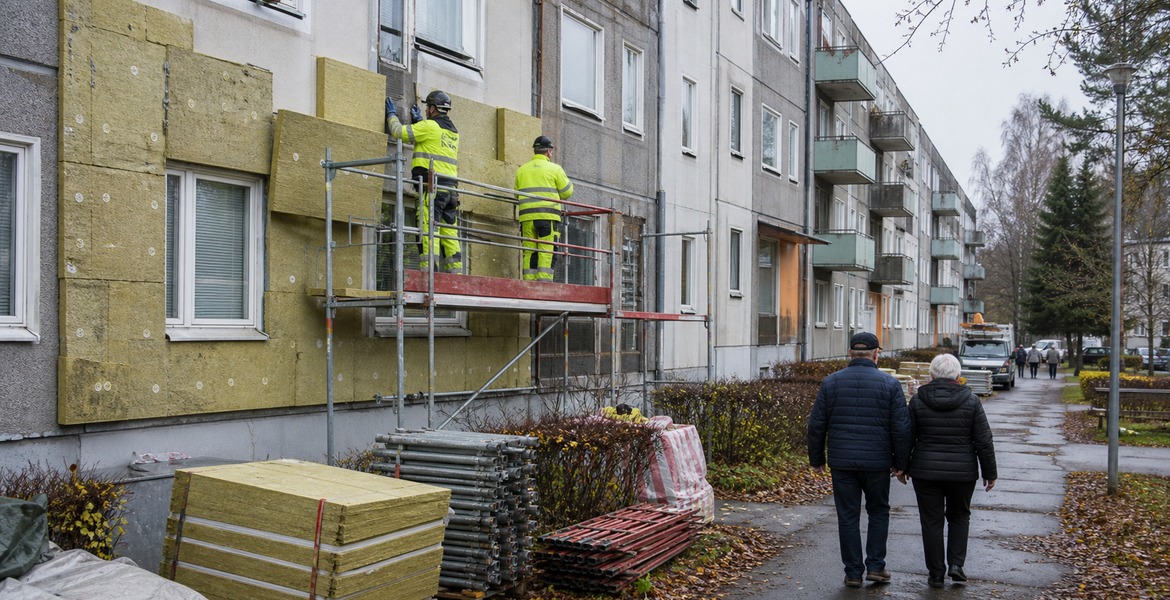
A fictional apartment retrofit fund is targeting draughty postwar suburbs with high heating costs.

A fictional apartment retrofit fund is targeting draughty postwar suburbs with high heating costs.

A fictional retrofit fund will prioritize apartment blocks where residents face high heating costs and poor indoor comfort.

The grants cover insulation, ventilation balancing and window upgrades, with rent increases capped during the payback period.

Tenant groups welcome the focus on comfort but want stronger oversight of contractors.

AD:
A colourful dinner recipe advertisement

How the plan works

Municipal officials say the first buildings were chosen using energy bills, complaints and maintenance records.

Applications are ranked using measured heat loss, resident income and the condition of shared building systems. The fund combines insulation grants with ventilation checks to avoid creating new moisture problems.

Housing associations must report actual energy use for two winters after completion, allowing the programme to compare promised and delivered savings.

Residents will receive a plain-language renovation plan before work begins, including expected disruption, ventilation changes and the method used to calculate rent effects. A tenant adviser can request corrections where the building record is incomplete.

The next stage

The fund reserves part of its budget for follow-up repairs. That is intended to prevent a common failure in which insulation is installed but poorly adjusted heating or ventilation systems erase much of the expected benefit.

The reporting behind “Apartment retrofit fund targets draughty postwar suburbs” also points to a broader question for Infrastructure: how a promising local initiative can become dependable enough to survive beyond its first season. Organisers are documenting costs, staffing needs and practical obstacles so that later decisions can be based on evidence rather than enthusiasm alone.

People involved in the work say the next stage will be deliberately measured. Instead of announcing a rapid expansion, the partners will compare participation, quality and day-to-day reliability over several months. That should make it easier to identify which parts deserve further investment and which need to be redesigned.

Access is another part of the evaluation. The project will be judged not only by headline numbers, but by whether people of different ages, incomes and levels of experience can use it without unnecessary barriers. Clear information, predictable opening times and affordable participation are all included in the review.

Independent researchers and community representatives have been invited to challenge the early findings. Their role is to test optimistic assumptions, speak with people who chose not to participate and examine any unintended effects that may be hidden by an encouraging launch period.

Funding for the immediate follow-up has been secured, although longer-term decisions remain open. A public progress report is expected after the next full operating cycle, with the underlying measurements published alongside the conclusions wherever privacy and commercial agreements allow.

For residents, the value of the experiment may ultimately be quite practical. If the approach works, it offers a model that other neighbourhoods can adapt without copying every detail. If it falls short, the transparent evaluation should still provide useful lessons about what a stronger version would require.

The editorial team will return to the story as the evidence develops. That follow-up matters because early success can look different once routines, budgets and public expectations settle into place. Readers with direct experience of the initiative are being invited to share observations that can be checked and included in later reporting.

AD:
Aeon Daily fictional display advertising campaign
Subscribe
Notify of
guest
0 Comments
Oldest
Newest Most Voted

Researchers turn forestry waste into recyclable insulation panels

Circular materials

Updated August 11, 2026, Published August 9, 2026 – By Daniel Brooks
Editorial photo illustration
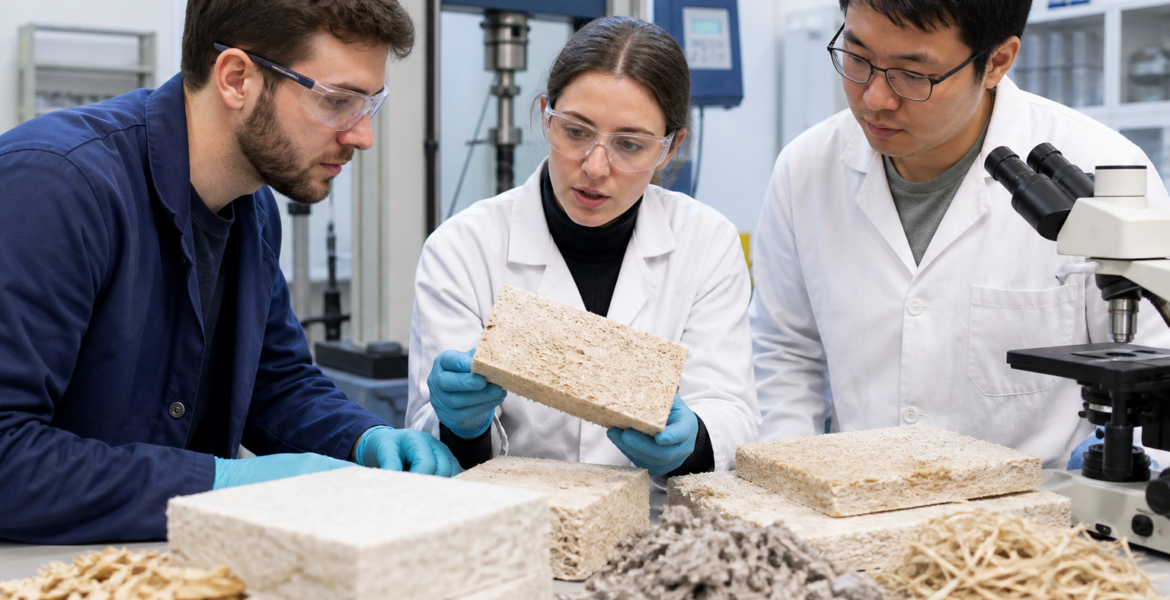
A university materials team has produced rigid insulation panels from forestry fibres that can be separated and reused at the end of a building renovation.

A university materials team has produced rigid insulation panels from forestry fibres that can be separated and reused at the end of a building renovation.

Researchers at a northern European university have developed an insulation panel made primarily from short forestry fibres that are normally burned for low-grade energy. The panels are pressed with a reversible mineral binder instead of a conventional permanent adhesive.

Laboratory tests indicate that the material insulates at a level comparable with several common fibre products while remaining rigid enough for renovation work. The team is now testing moisture behaviour and long-term dimensional stability.

The reversible binder is central to the project. When a panel reaches the end of its useful life, it can be softened in a controlled process and separated into fibres and mineral components for reuse.

AD:

How the work is being tested

Building researchers caution that fire certification and full-scale ageing tests remain before commercial use. They also want to study how the panels perform when installers cut and handle them on real construction sites.

A demonstration renovation is planned for winter. Sensors inside the walls will track humidity and heat loss while contractors document installation time and material waste.

The raw fibres come from branches and processing residues that are too short for conventional timber products. Researchers wash and grade the material before pressing it, allowing the panels to be manufactured without relying on fibres suitable for higher-value uses.

The demonstration building will remain occupied during the test. That allows the team to compare laboratory performance with noise, dust, installation errors and the practical demands of renovation.

The next stage of evidence

The reporting behind “Researchers turn forestry waste into recyclable insulation panels” also points to a broader question for Science & Research: how a promising local initiative can become dependable enough to survive beyond its first season. Organisers are documenting costs, staffing needs and practical obstacles so that later decisions can be based on evidence rather than enthusiasm alone.

People involved in the work say the next stage will be deliberately measured. Instead of announcing a rapid expansion, the partners will compare participation, quality and day-to-day reliability over several months. That should make it easier to identify which parts deserve further investment and which need to be redesigned.

Access is another part of the evaluation. The project will be judged not only by headline numbers, but by whether people of different ages, incomes and levels of experience can use it without unnecessary barriers. Clear information, predictable opening times and affordable participation are all included in the review.

Independent researchers and community representatives have been invited to challenge the early findings. Their role is to test optimistic assumptions, speak with people who chose not to participate and examine any unintended effects that may be hidden by an encouraging launch period.

Funding for the immediate follow-up has been secured, although longer-term decisions remain open. A public progress report is expected after the next full operating cycle, with the underlying measurements published alongside the conclusions wherever privacy and commercial agreements allow.

For residents, the value of the experiment may ultimately be quite practical. If the approach works, it offers a model that other neighbourhoods can adapt without copying every detail. If it falls short, the transparent evaluation should still provide useful lessons about what a stronger version would require.