


Debate

AD:

Cities should publish the evidence behind every algorithmic decision

Updated August 11, 2026, Published August 6, 2026 – By Maya Collins
Fintech firms prepare for stricter instant-payment checks

Public algorithms should be governed by evidence, appeal rights and democratic oversight, not vendor secrecy.

City governments are buying automated systems to prioritise inspections, assess applications and detect suspected fraud. These tools are often presented as neutral improvements in efficiency, yet their assumptions can quietly determine who receives attention and who is left waiting.

Whenever an algorithm influences a public decision, the authority using it should publish the evidence behind the model, the error rates found during testing and the safeguards available to residents. Commercial confidentiality cannot be allowed to erase public accountability.

A transparent register would not require municipalities to disclose every line of software. It would require them to explain what data is used, what outcome is predicted, how frequently the model is audited and how a person can challenge an incorrect result.

AD:
Aeon Daily fictional display advertising campaign

The case for change

Democratic institutions earn trust when they make power visible. The same principle must apply when that power is exercised through code.

Independent audits should include people affected by the service, not only technical consultants. Residents often identify practical harms that remain invisible in a laboratory accuracy score.

Authorities should also publish when a system is withdrawn or substantially changed. Transparency must cover failure as well as successful pilot announcements.

Publication should begin before procurement, with a plain account of the problem an authority wants the system to solve. That would allow residents and elected representatives to ask whether automation is appropriate at all, rather than debating safeguards only after a contract is signed.

What should happen next

When vendors invoke commercial secrecy, the burden should remain on the authority to preserve public accountability. A service does not become less public simply because part of its decision process is rented from a private supplier.

The reporting behind “Cities should publish the evidence behind every algorithmic decision” also points to a broader question for Debate: how a promising local initiative can become dependable enough to survive beyond its first season. Organisers are documenting costs, staffing needs and practical obstacles so that later decisions can be based on evidence rather than enthusiasm alone.

People involved in the work say the next stage will be deliberately measured. Instead of announcing a rapid expansion, the partners will compare participation, quality and day-to-day reliability over several months. That should make it easier to identify which parts deserve further investment and which need to be redesigned.

Access is another part of the evaluation. The project will be judged not only by headline numbers, but by whether people of different ages, incomes and levels of experience can use it without unnecessary barriers. Clear information, predictable opening times and affordable participation are all included in the review.

Independent researchers and community representatives have been invited to challenge the early findings. Their role is to test optimistic assumptions, speak with people who chose not to participate and examine any unintended effects that may be hidden by an encouraging launch period.

Funding for the immediate follow-up has been secured, although longer-term decisions remain open. A public progress report is expected after the next full operating cycle, with the underlying measurements published alongside the conclusions wherever privacy and commercial agreements allow.


AD:
Aeon Daily fictional display advertising campaign
Subscribe
Notify of
guest
0 Comments
Oldest
Newest Most Voted

Cities need a public-interest test before deploying urban AI

Updated August 11, 2026, Published August 7, 2026 – By Maya Collins
Wind corridor proposal divides coastal planning board
Public authorities must keep human responsibility at the centre of automated decisions, argues this fictional contribution.

Public authorities must keep human responsibility at the centre of automated decisions, argues this fictional contribution.

City governments are buying artificial-intelligence systems faster than they are building the institutions needed to govern them. The result is a growing gap between what public technology can do and what citizens are told about it.

A public-interest test should be required before an automated system is used in housing, transport, welfare or policing. The test should explain the problem being solved, the evidence behind the system and who remains accountable when it fails.

Procurement documents are not enough. Residents need plain-language information about the data being used, the risks of discrimination and the route for challenging an automated decision.

AD:

Accountability must remain human

The case for change

No algorithm should become a convenient shield for officials. A named public authority must remain responsible for every decision, even when a private supplier owns the software.

Independent audits should also be published before deployment and repeated when a system changes. Trade secrecy cannot outweigh the rights of people affected by public decisions.

Cities can still innovate. The point of a public-interest test is not to stop useful technology, but to ensure that efficiency does not quietly replace democratic oversight.

This is a fictional debate article created for the Aeon Daily demonstration site.

What should happen next

The proposal would also require an accessible appeal route whenever a resident is adversely affected by an automated recommendation. A human decision-maker must be able to review both the data and the reasoning used by the system.

Public procurement rules should reward explainability and measurable public value, not simply the lowest initial price or the most ambitious vendor presentation.

The reporting behind “Cities need a public-interest test before deploying urban AI” also points to a broader question for Debate: how a promising local initiative can become dependable enough to survive beyond its first season. Organisers are documenting costs, staffing needs and practical obstacles so that later decisions can be based on evidence rather than enthusiasm alone.

People involved in the work say the next stage will be deliberately measured. Instead of announcing a rapid expansion, the partners will compare participation, quality and day-to-day reliability over several months. That should make it easier to identify which parts deserve further investment and which need to be redesigned.

Access is another part of the evaluation. The project will be judged not only by headline numbers, but by whether people of different ages, incomes and levels of experience can use it without unnecessary barriers. Clear information, predictable opening times and affordable participation are all included in the review.

Independent researchers and community representatives have been invited to challenge the early findings. Their role is to test optimistic assumptions, speak with people who chose not to participate and examine any unintended effects that may be hidden by an encouraging launch period.

Funding for the immediate follow-up has been secured, although longer-term decisions remain open. A public progress report is expected after the next full operating cycle, with the underlying measurements published alongside the conclusions wherever privacy and commercial agreements allow.

For residents, the value of the experiment may ultimately be quite practical. If the approach works, it offers a model that other neighbourhoods can adapt without copying every detail. If it falls short, the transparent evaluation should still provide useful lessons about what a stronger version would require.

Public transport is climate policy, not a luxury service

Updated August 11, 2026, Published August 5, 2026 – By Maya Collins
Regional bus operators test demand-based evening routes

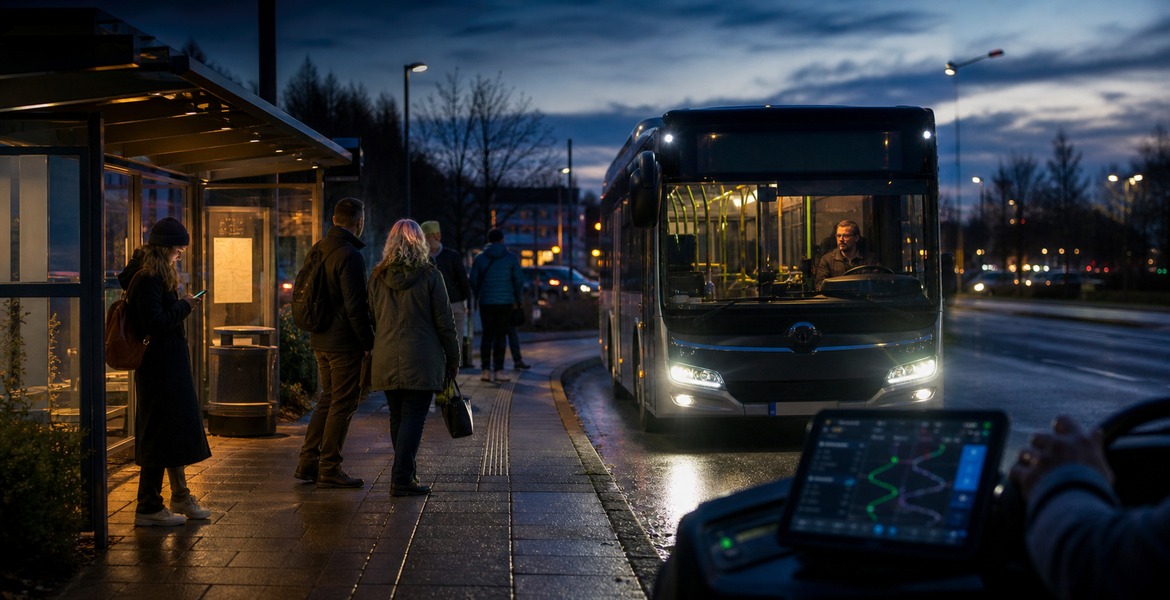
Reliable evening buses and regional railways are basic infrastructure for a fair transition.

Politicians regularly describe public transport as an environmental priority, but too often treat the service itself as an optional expense. Routes are cut, evening departures disappear and passengers are then blamed when ridership falls.

A credible climate policy starts with a timetable people can trust. Workers on late shifts, students and older residents need dependable connections every day, not only during peak commuting hours.

Investment should therefore be measured against access as well as ticket revenue. A lightly used rural departure may still prevent isolation, support local employment and reduce the need for a second family car.

AD:

The case for change

Public transport is not a decorative addition to climate policy. It is one of the practical systems that makes lower-emission daily life possible.

Stable funding would allow operators to plan routes over several years and coordinate timetables with schools, hospitals and major employers. Short annual contracts make that kind of network planning difficult.

A fair transition depends on services that people can use before they are asked to change established habits.

Transport policy also shapes access to work, education and healthcare. When evening routes disappear, the cost is carried most heavily by people with irregular hours, young residents and households that cannot maintain a second car.

What should happen next

Investment decisions should therefore measure access and resilience alongside passenger revenue. A bus that connects a village to essential services creates public value even when every departure is not full.

The reporting behind “Public transport is climate policy, not a luxury service” also points to a broader question for Debate: how a promising local initiative can become dependable enough to survive beyond its first season. Organisers are documenting costs, staffing needs and practical obstacles so that later decisions can be based on evidence rather than enthusiasm alone.

People involved in the work say the next stage will be deliberately measured. Instead of announcing a rapid expansion, the partners will compare participation, quality and day-to-day reliability over several months. That should make it easier to identify which parts deserve further investment and which need to be redesigned.

Access is another part of the evaluation. The project will be judged not only by headline numbers, but by whether people of different ages, incomes and levels of experience can use it without unnecessary barriers. Clear information, predictable opening times and affordable participation are all included in the review.

Independent researchers and community representatives have been invited to challenge the early findings. Their role is to test optimistic assumptions, speak with people who chose not to participate and examine any unintended effects that may be hidden by an encouraging launch period.

Funding for the immediate follow-up has been secured, although longer-term decisions remain open. A public progress report is expected after the next full operating cycle, with the underlying measurements published alongside the conclusions wherever privacy and commercial agreements allow.
For residents, the value of the experiment may ultimately be quite practical. If the approach works, it offers a model that other neighbourhoods can adapt without copying every detail. If it falls short, the transparent evaluation should still provide useful lessons about what a stronger version would require.