
A careful two-year restoration has reopened a much-loved walking route while giving rare dune plants room to recover.
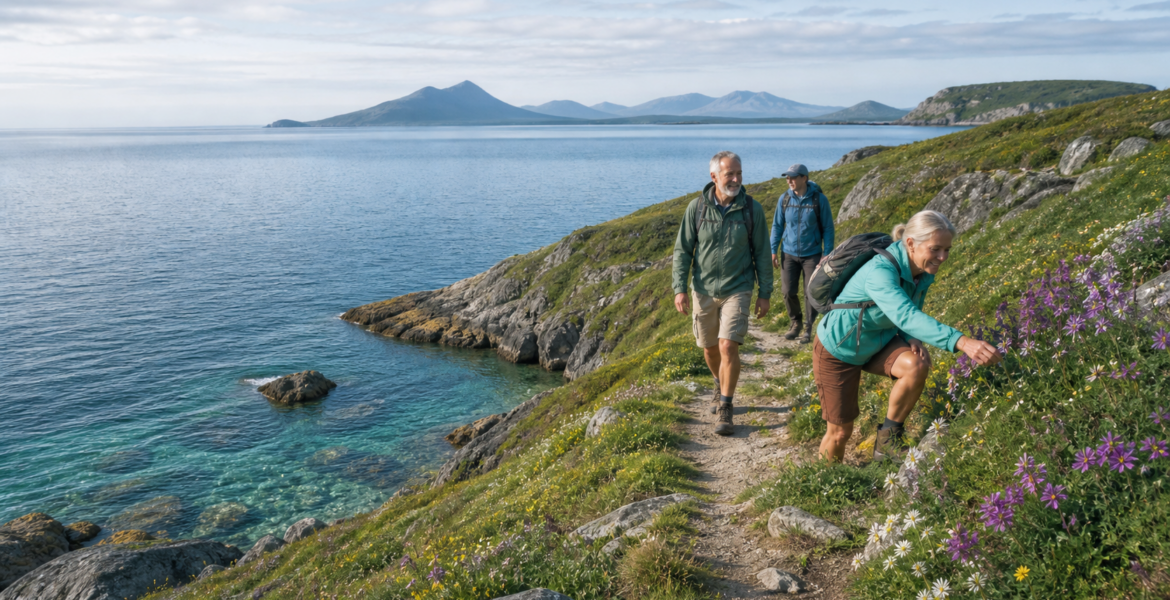
The coastal path at Bracken Bay reopened this week after local volunteers, ecologists and park staff completed a two-year effort to repair sections damaged by winter storms. New raised walkways now guide visitors across the most sensitive dunes without closing the landscape off from everyday use.
The work began with small weekend teams planting marram grass and removing invasive shrubs. Their roots help bind loose sand, while low rope markers give young plants time to establish. Organisers say the project succeeded because restoration was treated as a shared civic task rather than a fenced-off conservation exercise.
Families returned on opening morning for guided walks, birdwatching and a simple picnic near the old lifeboat station. The route remains accessible from both ends, and new resting places have been added where the path climbs above the beach.

A practical local response
Ecologists will monitor erosion and nesting birds through the autumn. If the first season goes well, the same method could be used on two neighbouring stretches of coast where heavy footfall has created informal shortcuts.
For residents, the result is pleasingly modest: the familiar walk is back, the sea remains visible at every turn, and the landscape has been given enough breathing room to look after itself.
The reporting behind “Coastal trail reopens after volunteers restore fragile dunes” also points to a broader question for Environment: how a promising local initiative can become dependable enough to survive beyond its first season. Organisers are documenting costs, staffing needs and practical obstacles so that later decisions can be based on evidence rather than enthusiasm alone.
People involved in the work say the next stage will be deliberately measured. Instead of announcing a rapid expansion, the partners will compare participation, quality and day-to-day reliability over several months. That should make it easier to identify which parts deserve further investment and which need to be redesigned.
What happens next
Access is another part of the evaluation. The project will be judged not only by headline numbers, but by whether people of different ages, incomes and levels of experience can use it without unnecessary barriers. Clear information, predictable opening times and affordable participation are all included in the review.
Independent researchers and community representatives have been invited to challenge the early findings. Their role is to test optimistic assumptions, speak with people who chose not to participate and examine any unintended effects that may be hidden by an encouraging launch period.
Funding for the immediate follow-up has been secured, although longer-term decisions remain open. A public progress report is expected after the next full operating cycle, with the underlying measurements published alongside the conclusions wherever privacy and commercial agreements allow.
For residents, the value of the experiment may ultimately be quite practical. If the approach works, it offers a model that other neighbourhoods can adapt without copying every detail. If it falls short, the transparent evaluation should still provide useful lessons about what a stronger version would require.
The editorial team will return to the story as the evidence develops. That follow-up matters because early success can look different once routines, budgets and public expectations settle into place. Readers with direct experience of the initiative are being invited to share observations that can be checked and included in later reporting.