
A group of European cities is redesigning exposed bus stops with shade, seating and drinking water as summer heat becomes a regular transport risk.
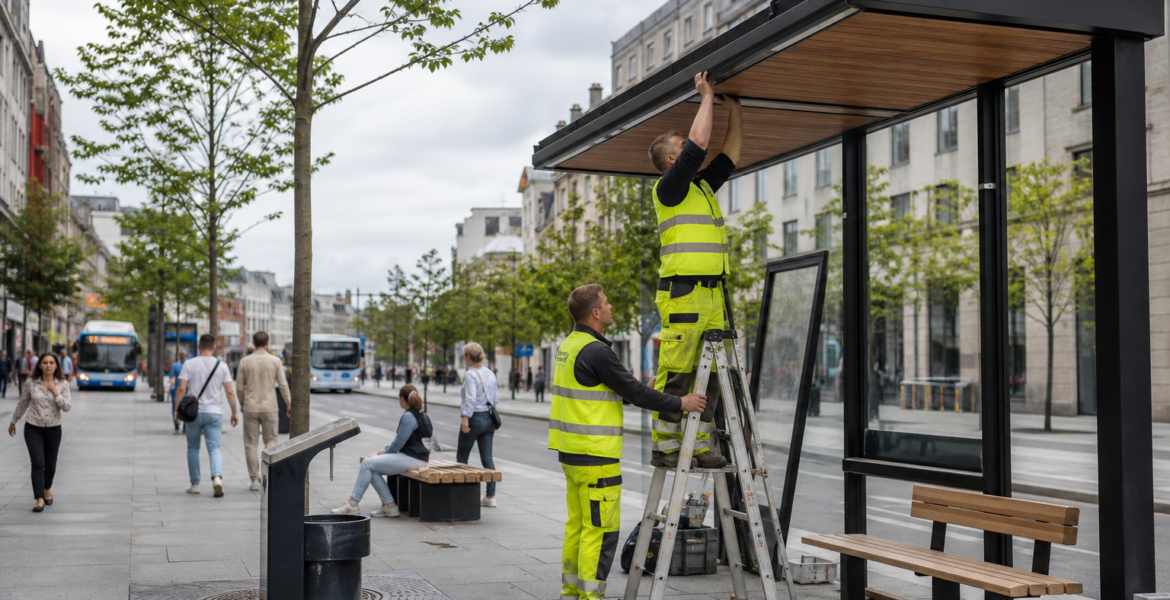
Municipal transport departments in six European cities have begun replacing exposed bus stops with shaded shelters designed for longer and more frequent periods of extreme heat. The first installations combine deep roofs, ventilated side panels, trees and access to drinking water.
The project follows passenger surveys showing that waiting conditions, rather than time spent on the bus, have become the most difficult part of many summer journeys. Older passengers and people travelling with small children reported avoiding afternoon services when shelters offered no protection from direct sun.
Engineers are also testing pale paving materials and small rainwater reservoirs that support nearby planting. Temperature sensors will compare the redesigned stops with conventional glass shelters over two summers.

A practical local response
Public-health officials say the work should be treated as basic transport maintenance rather than a decorative climate project. A shaded stop can lower heat exposure during a journey without requiring passengers to change their routines.
The pilot will be evaluated in October. If the results show meaningful temperature reductions, the participating cities plan to publish a shared design guide for smaller municipalities.
The new shelters are being placed first at hospitals, transport interchanges and stops used heavily by older residents. Planners combined passenger counts with surface-temperature maps so investment is not limited to the most visible city-centre locations.
Maintenance crews will inspect shade, water points and planting as one system. The cities want to avoid installing attractive prototypes that deteriorate because responsibility is divided between transport, parks and property departments.
What happens next
The reporting behind “Cities install shaded bus stops as heat alerts become routine” also points to a broader question for Environment: how a promising local initiative can become dependable enough to survive beyond its first season. Organisers are documenting costs, staffing needs and practical obstacles so that later decisions can be based on evidence rather than enthusiasm alone.
People involved in the work say the next stage will be deliberately measured. Instead of announcing a rapid expansion, the partners will compare participation, quality and day-to-day reliability over several months. That should make it easier to identify which parts deserve further investment and which need to be redesigned.
Access is another part of the evaluation. The project will be judged not only by headline numbers, but by whether people of different ages, incomes and levels of experience can use it without unnecessary barriers. Clear information, predictable opening times and affordable participation are all included in the review.
Independent researchers and community representatives have been invited to challenge the early findings. Their role is to test optimistic assumptions, speak with people who chose not to participate and examine any unintended effects that may be hidden by an encouraging launch period.
Funding for the immediate follow-up has been secured, although longer-term decisions remain open. A public progress report is expected after the next full operating cycle, with the underlying measurements published alongside the conclusions wherever privacy and commercial agreements allow.
For residents, the value of the experiment may ultimately be quite practical. If the approach works, it offers a model that other neighbourhoods can adapt without copying every detail. If it falls short, the transparent evaluation should still provide useful lessons about what a stronger version would require.