
AD:
Aeon Daily fictional display advertising campaign

Inside Aurora Fields: three nights when the Dutch polder became a city of sound

For three rain-streaked days, a reclaimed polder outside Zwolle became a temporary city of guitars, bicycles and patient optimism.

Updated August 11, 2026, Published August 9, 2026 – By Maya Collins
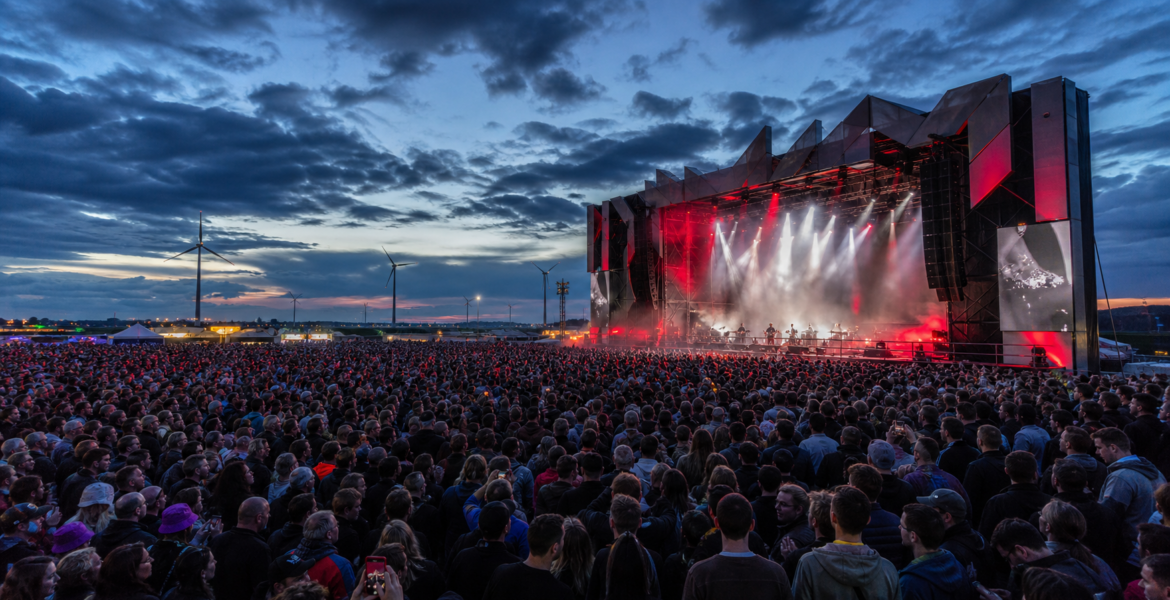
A large crowd watches the final performance at the fictional Aurora Fields festival in the Netherlands.

Aurora Fields was designed around a deceptively simple promise: make a large festival easier to navigate, kinder to its surroundings and serious enough about live music to let quiet moments survive beside the main stage.

The first impression was not the main stage but the road towards it. Thousands of visitors arrived by regional train, then transferred to a fleet of borrowed city buses or cycled the final six kilometres along a canal. The route passed working farms and lines of wind turbines before opening into a broad field where the festival had been assembled with unusual restraint.

There were no monumental gates or fantasy towers. A low black stage stood against the horizon, food stalls occupied a former machinery yard and the smaller performance spaces were built inside timber barns. Organisers said the design was intended to keep attention on musicians and audiences, but it also made the place easier to understand. People rarely appeared lost, even after dark.

That clarity mattered when the weather changed. A hard shower arrived just before Friday's opening performance, forcing technicians to cover equipment and sending the first crowd into the barns. Twenty minutes later, the clouds lifted and a Dutch post-rock trio stepped onto the smallest stage without introduction. The room fell quiet before the first note.

AD:
Aeon Daily fictional display advertising campaign

The sound of a temporary city

Aurora Fields was programmed less like a procession of headline names than a conversation between scenes. A Belgian brass ensemble handed its audience to a Danish electronic composer. A veteran British guitarist appeared at noon, while a young Rotterdam songwriter was given the final slot in a packed riverside tent.

The result was uneven in the best sense. Listeners moved because curiosity pulled them, not because a giant screen ordered them towards the next attraction. Some sets drew a few hundred people; others unexpectedly filled every path around a stage. The festival's most discussed performance came from Northern Current, a fictional five-piece band whose patient songs built from near silence to a final wall of drums and guitars.
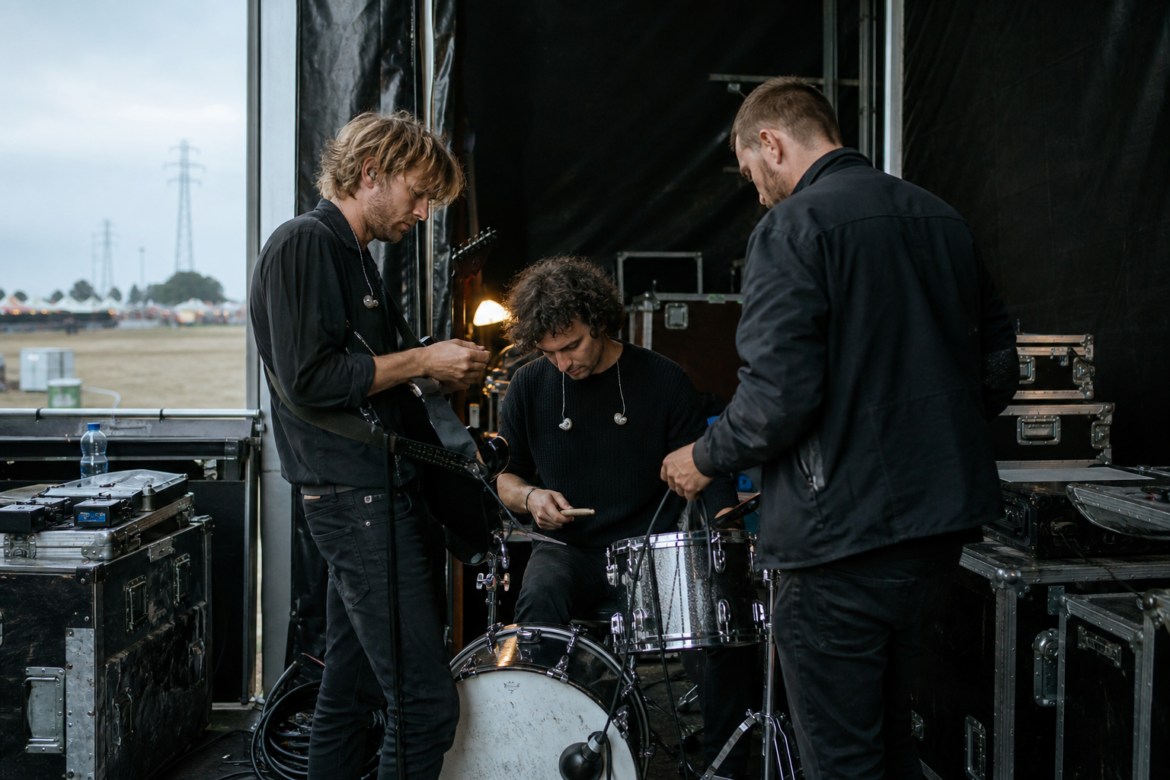
Musicians and a stage technician prepare instruments backstage at Aurora Fields.
Final preparations backstage before Northern Current's evening performance. Photo: Aeon Daily

Backstage, the atmosphere was less romantic. Flight cases stood in narrow corridors, cables were labelled twice and production staff watched the rain radar between sound checks. The headline band's drummer spent ten minutes replacing a damaged floor-tom skin while a technician dried a cable loom with towels.

“A festival only feels spontaneous because hundreds of people have removed the uncertainty,” said production manager Elise van Dalen, a fictional member of the organising team. Her crew had rehearsed the evacuation of each tent, mapped accessible routes over the softest ground and kept spare pumps beside the lowest drainage channels.

Rain, bicycles and practical choices

The campsite offered the clearest view of how the event worked. It was divided into compact fields linked by raised walkways, with bicycle parking closer to the entrances than car parking. Refill taps, repair stations and staffed quiet areas appeared at regular intervals. None of these features was glamorous, but together they reduced the friction that can dominate a long weekend outdoors.

Saturday morning began under a pale sky. Visitors tightened guy lines, hung jackets over temporary fences and queued for coffee in damp socks. A volunteer repair team moved between tents with spare pegs and rolls of tape. The mood was not euphoric; it was companionable, the particular calm of people solving small shared problems.
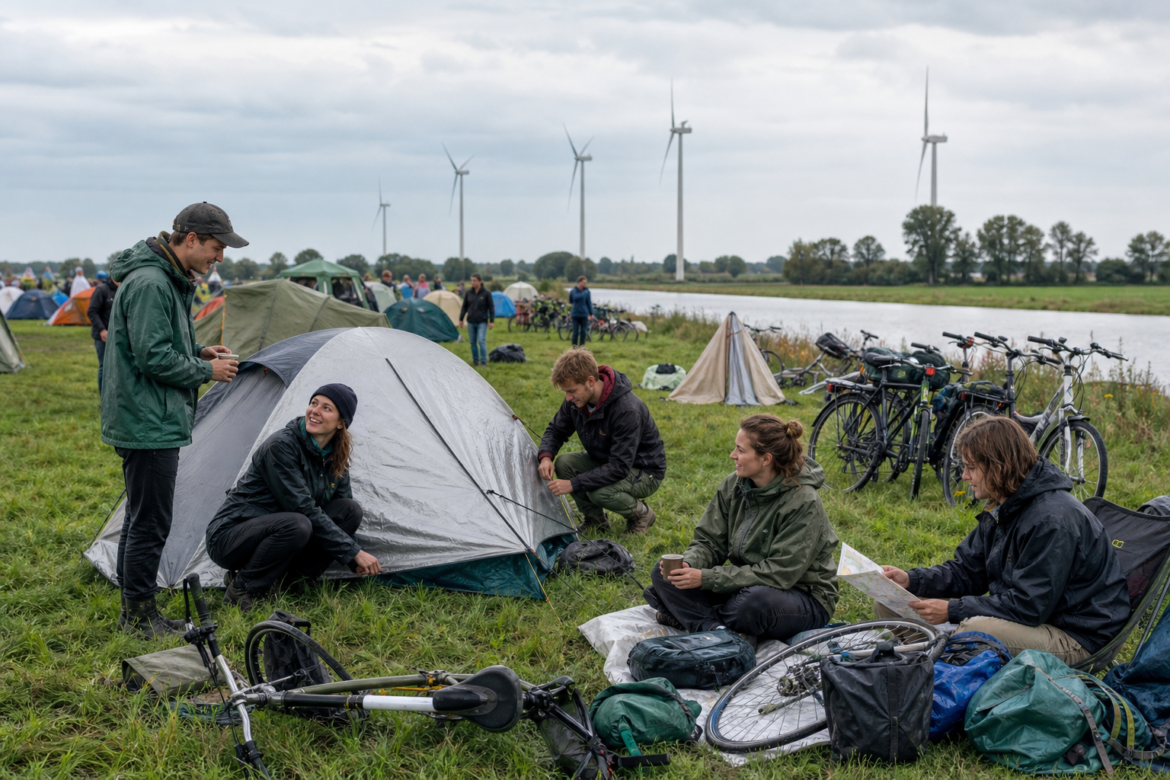
Festival visitors share coffee and repair a tent beside a Dutch canal after a night of rain.
Festival visitors repair a tent beside the canal after an overnight shower. Photo: Aeon Daily

Organisers claimed that nearly two thirds of ticket holders arrived without a private car. That figure has not been independently audited, but the evidence on the ground was persuasive: bicycle racks remained full, shuttle queues moved steadily and the usual late-night river of headlights never materialised.

The environmental choices were not presented as moral decoration. Reusable cups carried a small deposit, generators were grouped to reduce idle running and food vendors published ingredient origins at the point of sale. Several measures failed gracefully. A digital queue system was abandoned after mobile coverage weakened, and staff returned to handwritten boards within minutes.

When the field finally went quiet

By Sunday evening, the main field had absorbed three days of footsteps. The final audience arrived slowly, many carrying folded raincoats under their arms. Northern Current began with the stage almost dark. For the first half hour, the screens showed only close views of hands, drum skins and the movement of air through a singer's jacket.

The restraint made the eventual release more powerful. White lights opened across the crowd, the wind carried the last chorus towards the canal and, for a few minutes, a temporary collection of strangers behaved like a single attentive room. Phones appeared, but fewer than expected. Most people simply watched.

After the encore, the festival did not end with fireworks. House lights rose gradually and a recorded piano piece played while the audience moved towards buses and bicycles. Cleaning teams entered from the edges. On the campsite, visitors folded wet canvas under portable lamps.

Aurora Fields will be judged later by ticket sales, transport data and the condition of the land after the stages have gone. Those measurements matter. Yet its more interesting achievement was cultural: it showed that a large festival can feel ambitious without becoming exhausting, and that careful logistics can create room for genuine surprise.

At dawn on Monday, only the black frame of the main stage remained above the polder. The wind turbines turned at the same measured pace they had before the first bus arrived. For one weekend the field had held a city; by lunchtime, it was becoming a field again.

AD:
Subscribe
Notify of
guest
0 Comments
Oldest
Newest Most Voted

Old textile mill becomes year-round rehearsal space

Culture in shared spaces

Updated August 11, 2026, Published August 10, 2026 – By Maya Collins
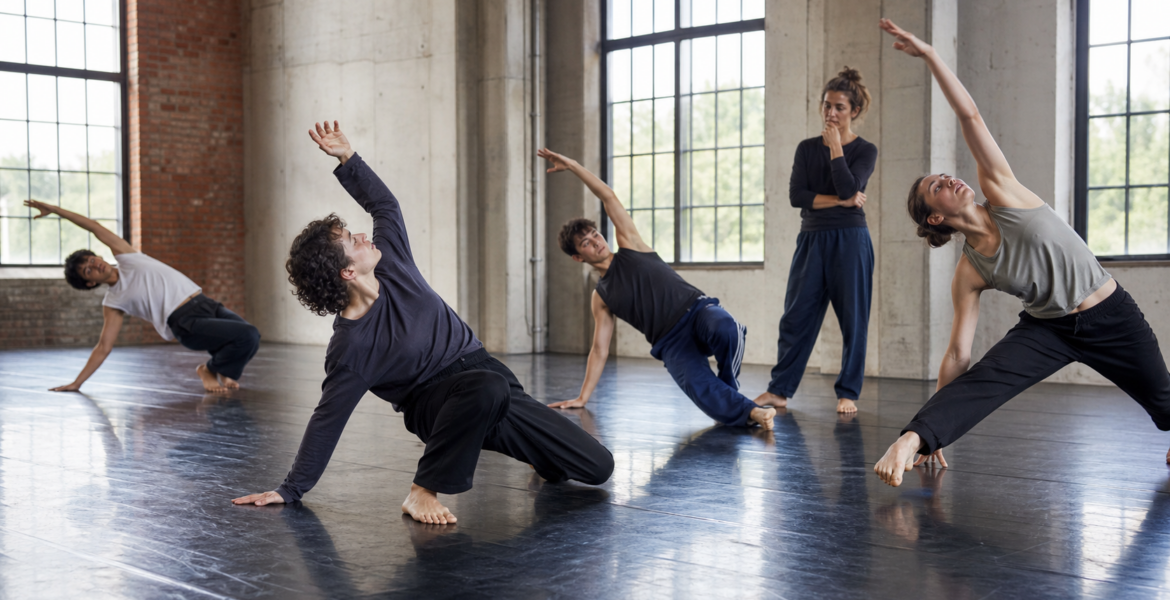
Contemporary dancers rehearsing in a restored industrial hall
A careful conversion gives dancers, musicians and theatre groups an affordable home without erasing the building’s industrial character.

A careful conversion gives dancers, musicians and theatre groups an affordable home without erasing the building’s industrial character.

The long-vacant Alder Mill has reopened as a year-round rehearsal centre after a phased renovation led by local arts organisations. Tall windows, timber columns and traces of the original machinery remain visible, while new sprung floors and acoustic partitions make the rooms practical for daily use.

The project began when independent companies compared waiting lists and realised that many groups were competing for the same few affordable hours. By sharing administration and technical equipment, they were able to make a larger building viable.

Dancers rehearsed in the main hall on opening day as a youth orchestra worked two floors above. Sound locks between rooms kept both sessions focused without making the building feel sealed or institutional.

AD:

A place for participation

A public programme will include open rehearsals, workshops and small performances. Several studios are reserved at reduced rates for emerging artists, with income from larger commercial bookings helping cover the difference.

The result is not a polished monument to industry. It is a working place, scuffed in the right ways, where culture can be made before it is presented.

The reporting behind “Old textile mill becomes year-round rehearsal space” also points to a broader question for Culture: how a promising local initiative can become dependable enough to survive beyond its first season. Organisers are documenting costs, staffing needs and practical obstacles so that later decisions can be based on evidence rather than enthusiasm alone.

People involved in the work say the next stage will be deliberately measured. Instead of announcing a rapid expansion, the partners will compare participation, quality and day-to-day reliability over several months. That should make it easier to identify which parts deserve further investment and which need to be redesigned.

The next chapter

Access is another part of the evaluation. The project will be judged not only by headline numbers, but by whether people of different ages, incomes and levels of experience can use it without unnecessary barriers. Clear information, predictable opening times and affordable participation are all included in the review.

Independent researchers and community representatives have been invited to challenge the early findings. Their role is to test optimistic assumptions, speak with people who chose not to participate and examine any unintended effects that may be hidden by an encouraging launch period.

Funding for the immediate follow-up has been secured, although longer-term decisions remain open. A public progress report is expected after the next full operating cycle, with the underlying measurements published alongside the conclusions wherever privacy and commercial agreements allow.

For residents, the value of the experiment may ultimately be quite practical. If the approach works, it offers a model that other neighbourhoods can adapt without copying every detail. If it falls short, the transparent evaluation should still provide useful lessons about what a stronger version would require.

The editorial team will return to the story as the evidence develops. That follow-up matters because early success can look different once routines, budgets and public expectations settle into place. Readers with direct experience of the initiative are being invited to share observations that can be checked and included in later reporting.

Community ceramics weekend opens studios across the city

Culture in shared spaces

Updated August 11, 2026, Published August 10, 2026 – By Maya Collins
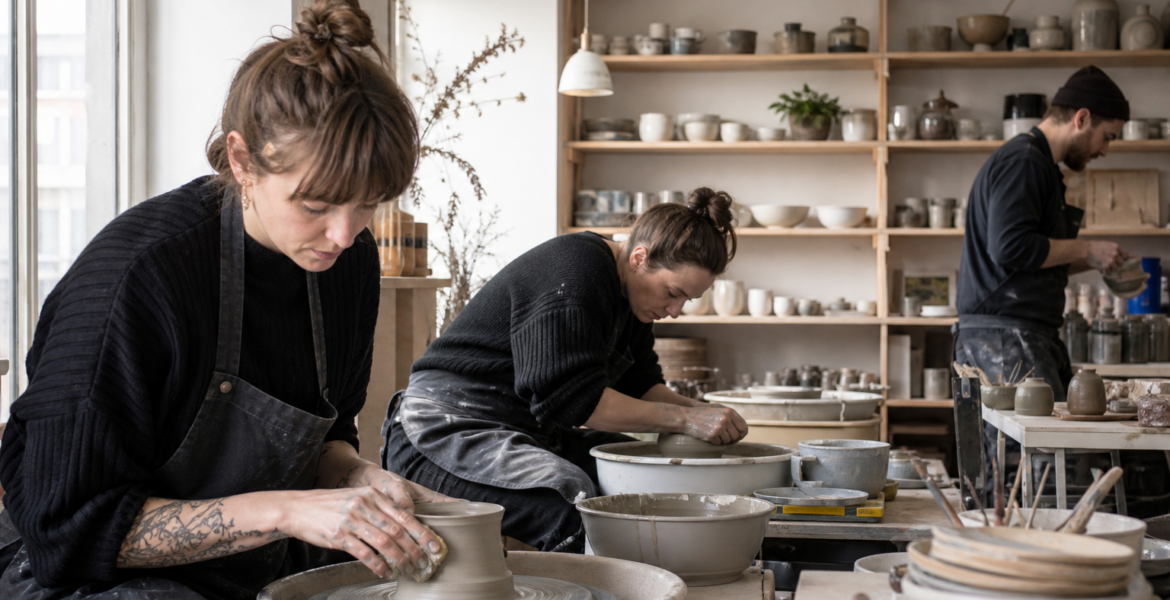
Potters work together in a bright Nordic ceramics studio.
Potters are inviting visitors behind the scenes for demonstrations, shared meals and a closer look at contemporary craft.

Potters are inviting visitors behind the scenes for demonstrations, shared meals and a closer look at contemporary craft.

More than thirty ceramic studios will open their doors this weekend, offering visitors a route through workshops that are usually hidden behind courtyards, shopfronts and former warehouses. The programme ranges from wheel throwing and tile making to experimental glazes fired with local ash.

The event grew from an informal map shared among makers. This year organisers have added timed demonstrations and accessible shuttle stops so that visitors can explore several neighbourhoods without rushing.

Many studios will show unfinished work as well as polished pieces. Artists say that seeing clay collapse, crack and return to the wheel gives a more honest picture of craft than a conventional display.

AD:

A place for participation

Community kilns and adult education centres are also participating, with short sessions for people who have never handled clay. Food stalls and long shared tables will turn two courtyards into temporary gathering places.

The weekend is free, though some workshops require booking. Organisers hope visitors leave with an appreciation not only for the objects but for the patience, heat and collective infrastructure behind them.

The reporting behind “Community ceramics weekend opens studios across the city” also points to a broader question for Culture: how a promising local initiative can become dependable enough to survive beyond its first season. Organisers are documenting costs, staffing needs and practical obstacles so that later decisions can be based on evidence rather than enthusiasm alone.

People involved in the work say the next stage will be deliberately measured. Instead of announcing a rapid expansion, the partners will compare participation, quality and day-to-day reliability over several months. That should make it easier to identify which parts deserve further investment and which need to be redesigned.

The next chapter

Access is another part of the evaluation. The project will be judged not only by headline numbers, but by whether people of different ages, incomes and levels of experience can use it without unnecessary barriers. Clear information, predictable opening times and affordable participation are all included in the review.

Independent researchers and community representatives have been invited to challenge the early findings. Their role is to test optimistic assumptions, speak with people who chose not to participate and examine any unintended effects that may be hidden by an encouraging launch period.

Funding for the immediate follow-up has been secured, although longer-term decisions remain open. A public progress report is expected after the next full operating cycle, with the underlying measurements published alongside the conclusions wherever privacy and commercial agreements allow.

For residents, the value of the experiment may ultimately be quite practical. If the approach works, it offers a model that other neighbourhoods can adapt without copying every detail. If it falls short, the transparent evaluation should still provide useful lessons about what a stronger version would require.

The editorial team will return to the story as the evidence develops. That follow-up matters because early success can look different once routines, budgets and public expectations settle into place. Readers with direct experience of the initiative are being invited to share observations that can be checked and included in later reporting.