


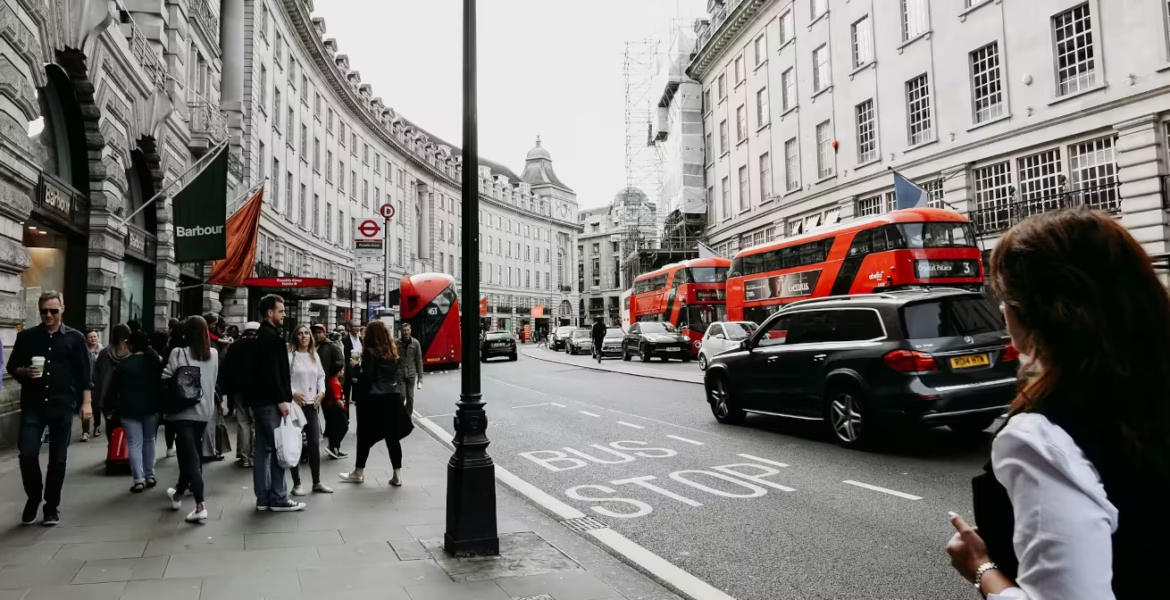
London’s traffic is not a crisis that arrives with sirens or emergency press conferences. It seeps into daily life, settling like exhaust into the lungs of the city, until delay becomes the default condition of existence.
It begins in the morning, when journeys that should take minutes are quietly recalculated into half-hours. It continues at lunchtime, when buses crawl past rows of idling cars, each occupied by a single person with somewhere important to be. By evening, congestion is no longer an inconvenience but an atmosphere, something breathed in and endured.
Traffic is rarely framed as a moral or political failure. It is discussed instead as weather: unfortunate, unavoidable, mildly annoying. Yet unlike rain, congestion is entirely man-made, sustained by choices repeated millions of times a day, wrapped in habit and defended by necessity.
The normalisation of delay
What makes London’s traffic so powerful is not its severity but its acceptance. Missed connections, late arrivals and extended commutes are treated as personal misfortunes rather than systemic symptoms. People apologise for traffic as though it were an act of God, not the cumulative result of planning decisions and private behaviour.

In this way, congestion disappears into the background of urban life. It becomes something to complain about, never something to confront. The city adapts downward, adjusting expectations rather than conditions.
A city of reasonable excuses
Everyone stuck in traffic has a good reason for being there. Children need to be delivered, tools transported, relatives visited. These explanations are not dishonest. They are simply incomplete. What they omit is the collective impact of millions of reasonable decisions colliding on streets that were never designed for them.
The result is a curious form of shared denial. Each driver experiences congestion as something inflicted by others, never as something they themselves contribute to. Responsibility dissolves into the queue ahead.
People apologise for traffic as though it were an act of God
London has experimented endlessly with traffic policy, but rarely with conviction. Measures are introduced cautiously, softened quickly and explained defensively. Any attempt to reduce car use is framed not as progress but as punishment.
This hesitation is not accidental. Serious action would require saying something deeply unpopular: that the city cannot function if everyone insists on driving everywhere. No rebranding exercise can make that truth palatable.
Movement as inequality
Congestion does not affect everyone equally. Those with flexible schedules, money or proximity absorb delays more easily. Those without lose hours of their lives to slow buses and polluted streets. Traffic, in this sense, is not just inefficient but unjust.
London likes to think of itself as dynamic and modern. But until it confronts the quiet tyranny of its traffic, it will remain a city permanently in motion — and permanently stuck.
Rudolf Heinz